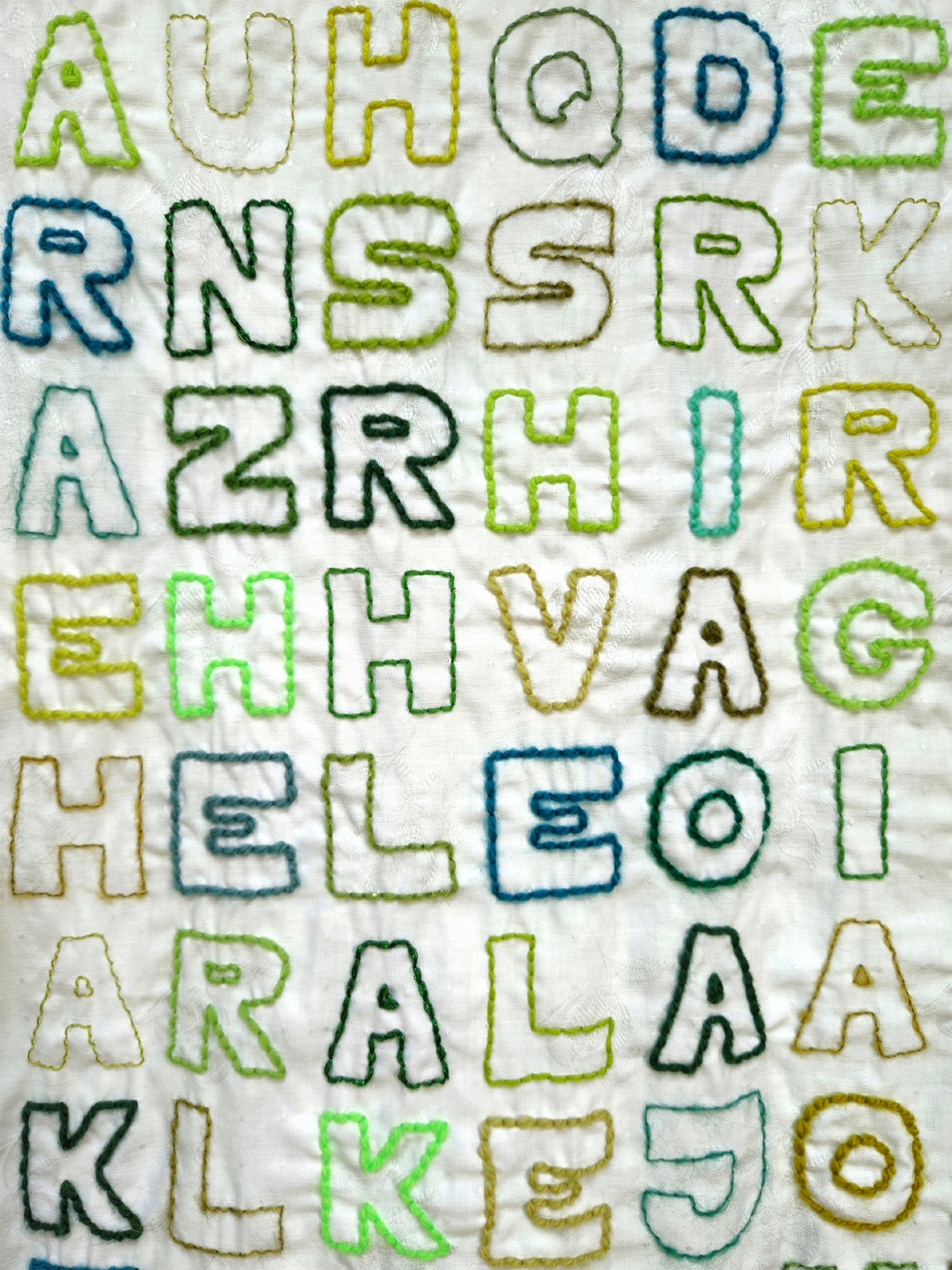
GLOBALITY OF GREEN
The Most Spoken Green
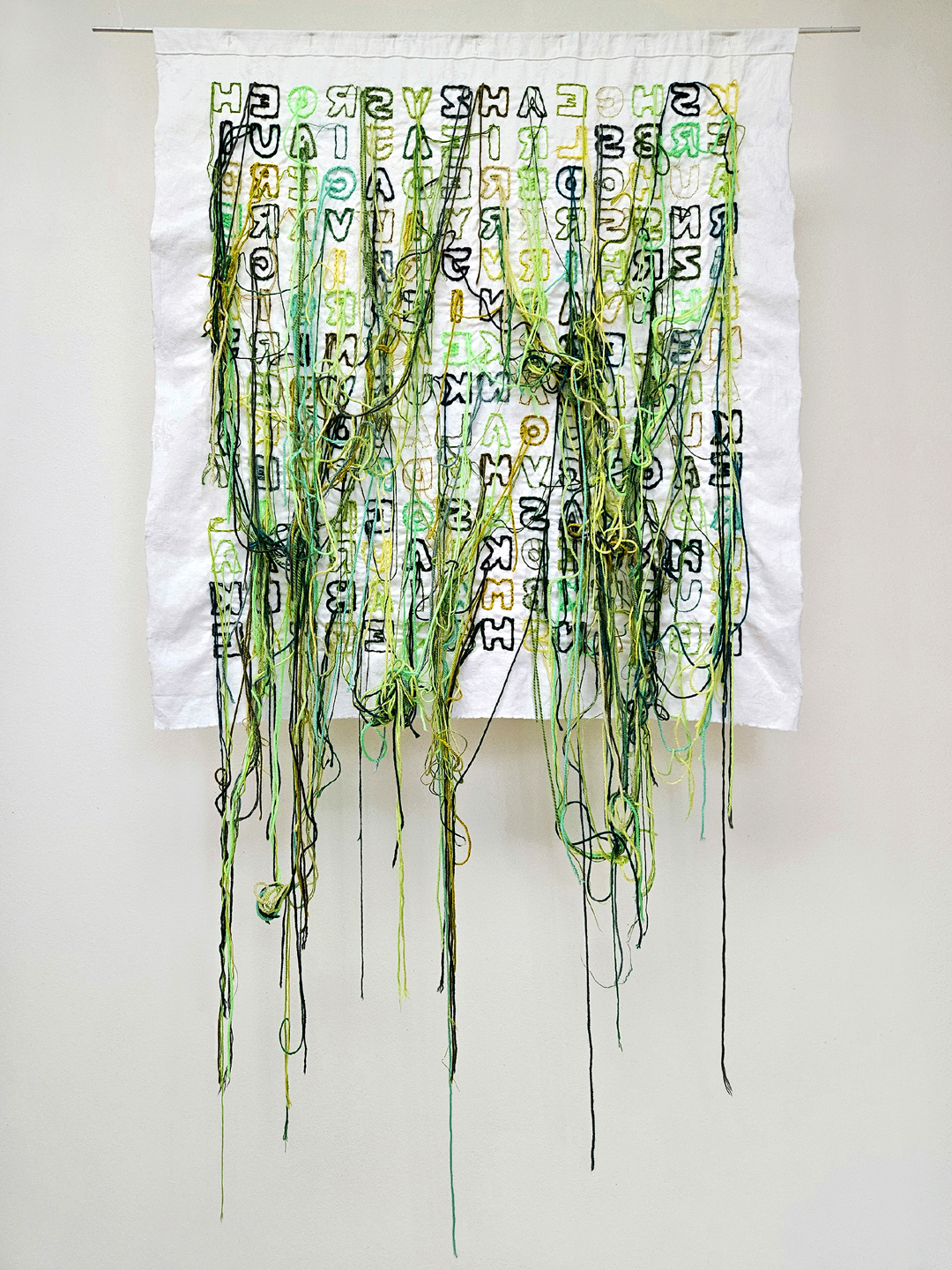
Green is the colour of nature, of life itself. Green also stands for politics, ecology and sustainability, as well as for hope, harmony and stability. Green concerns us all. We all use the term ‘green’, each in our own language. And it is this global diversity of linguistic variants that forms the basis of this work.
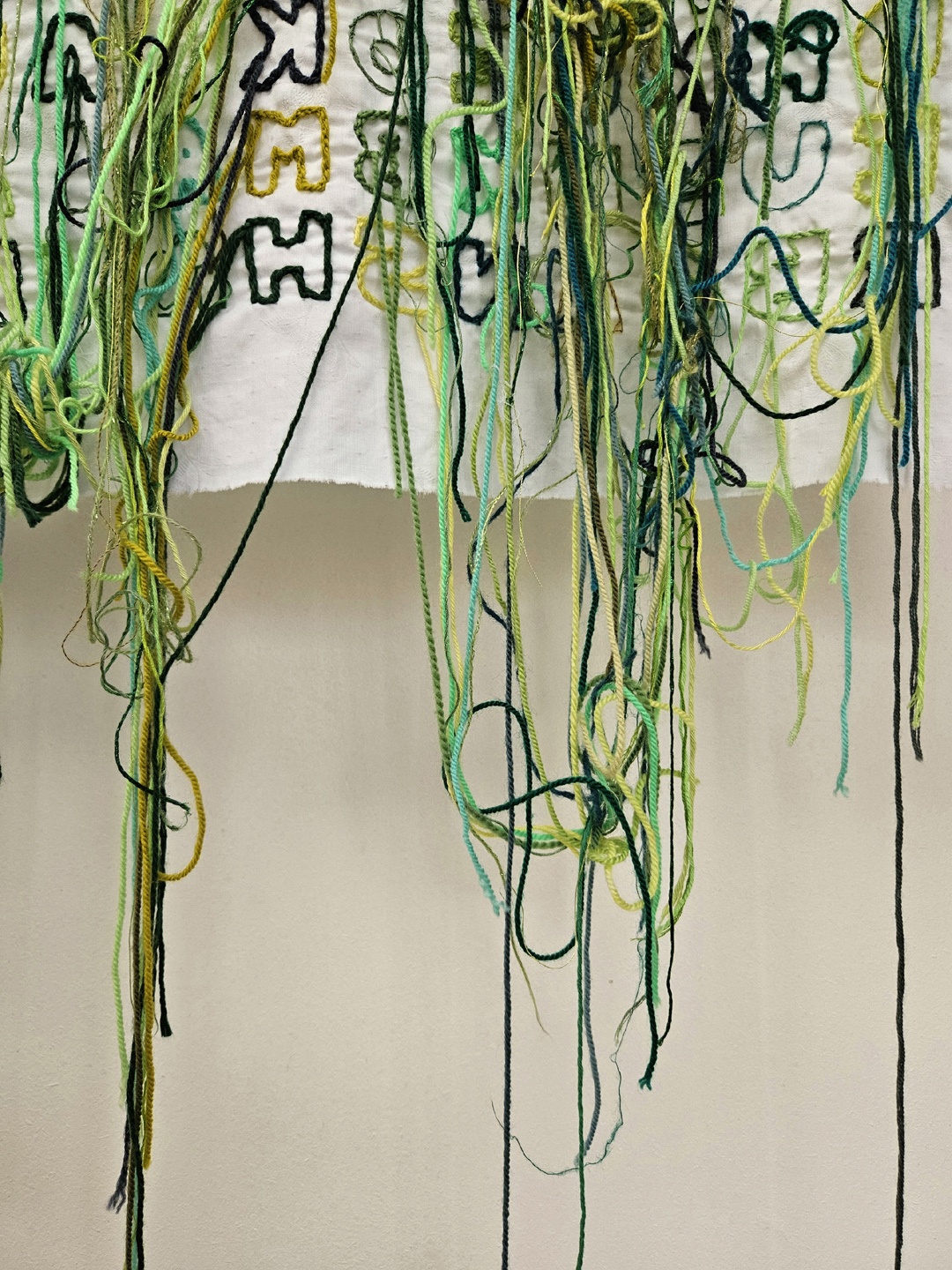
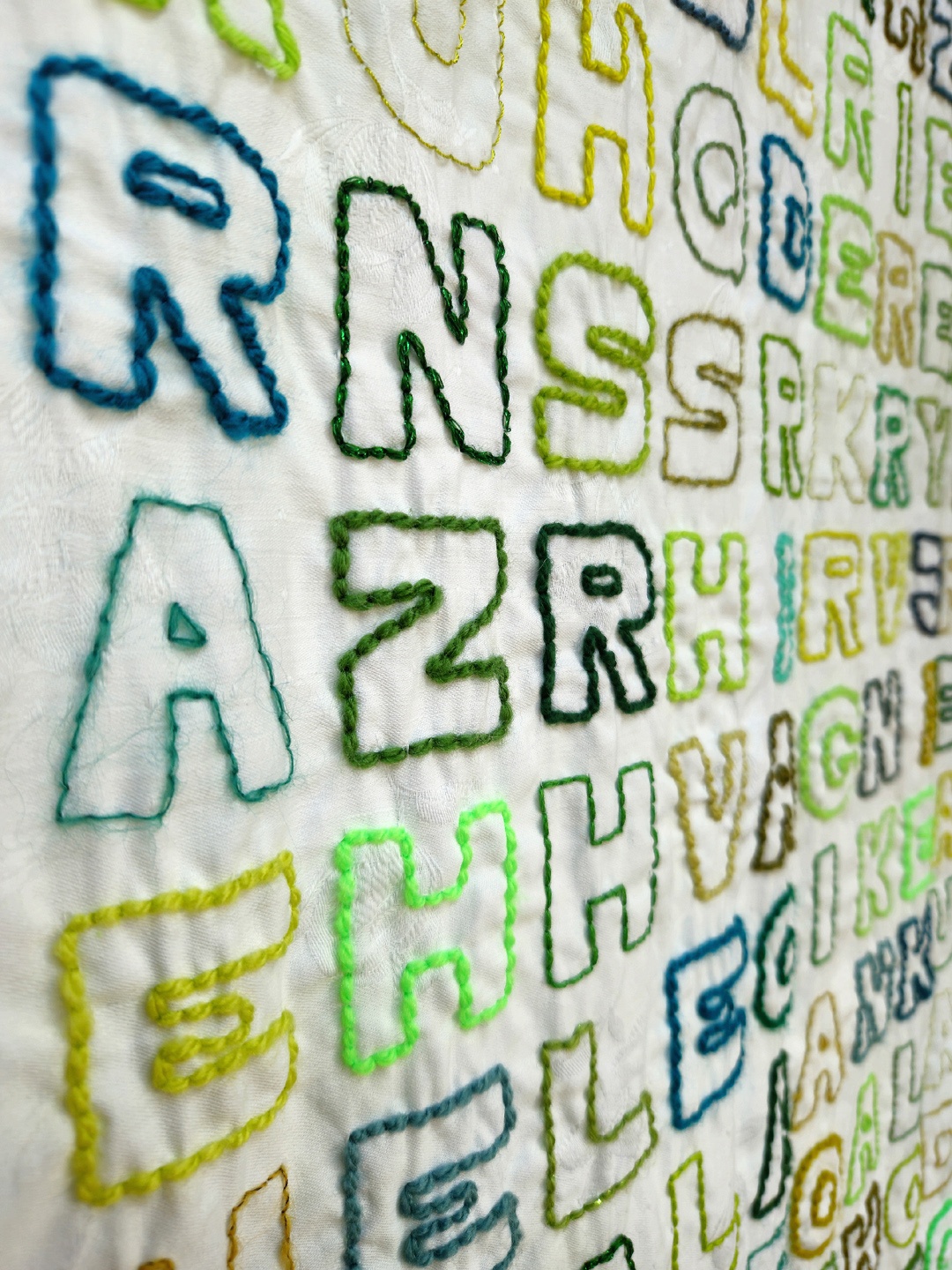
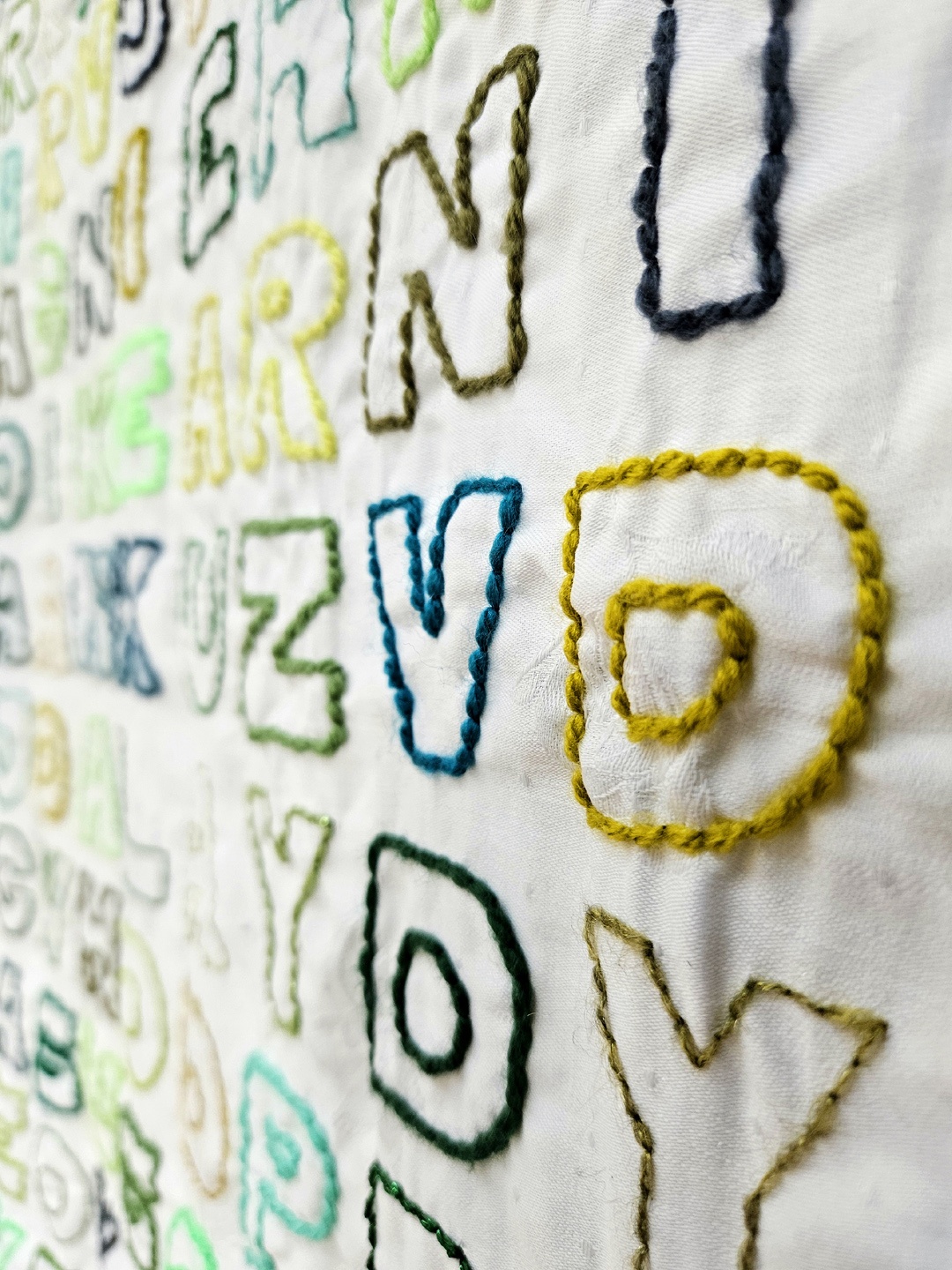
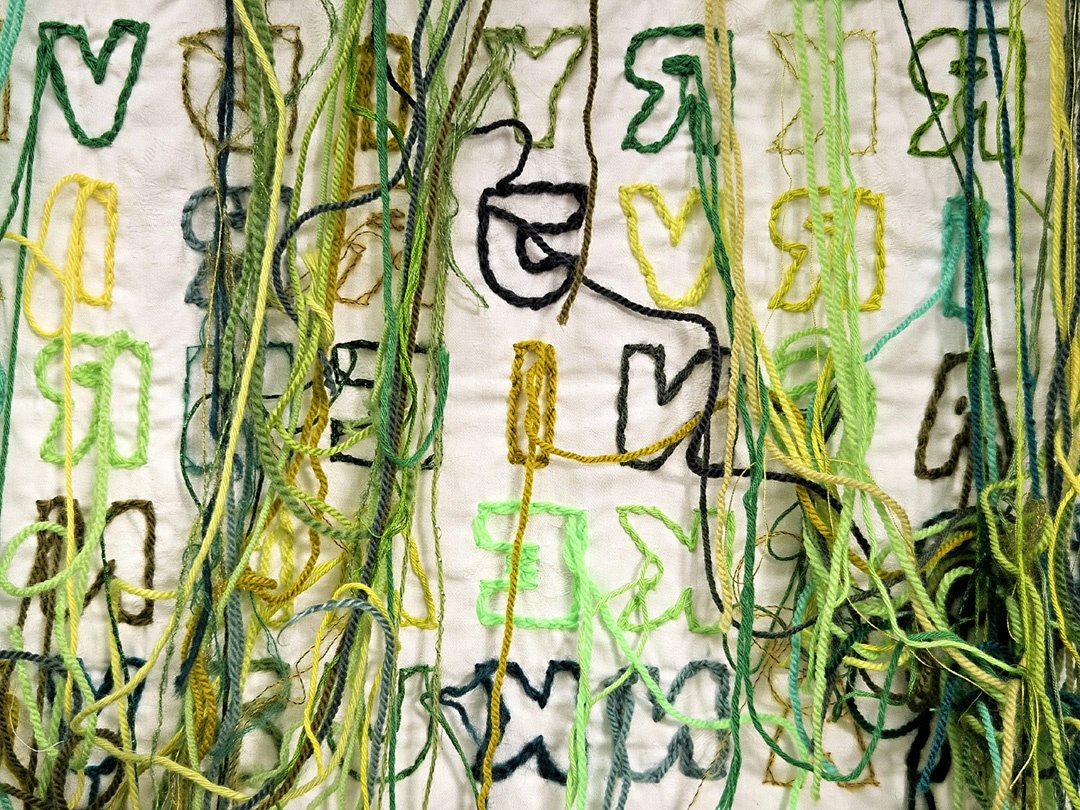
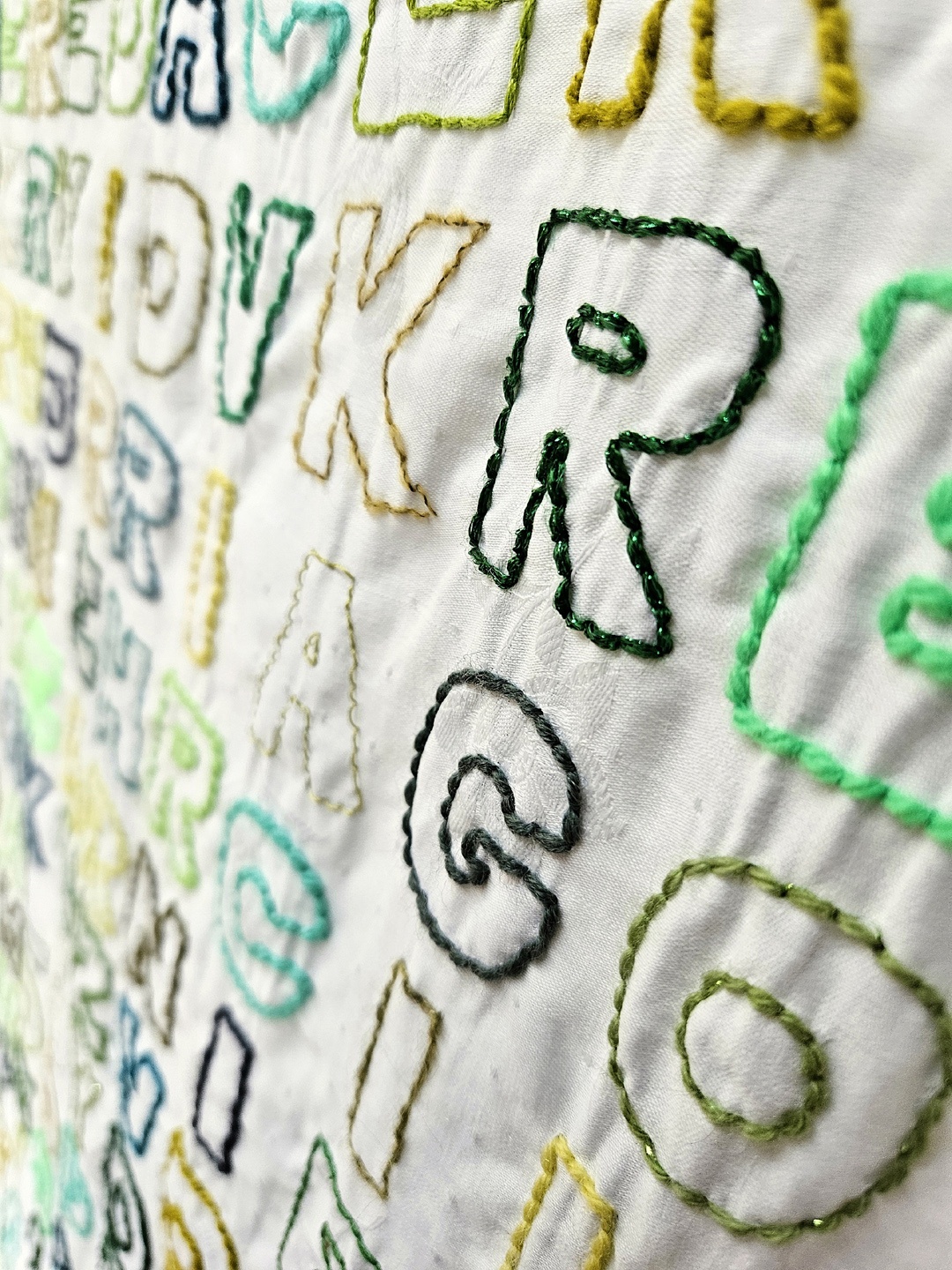
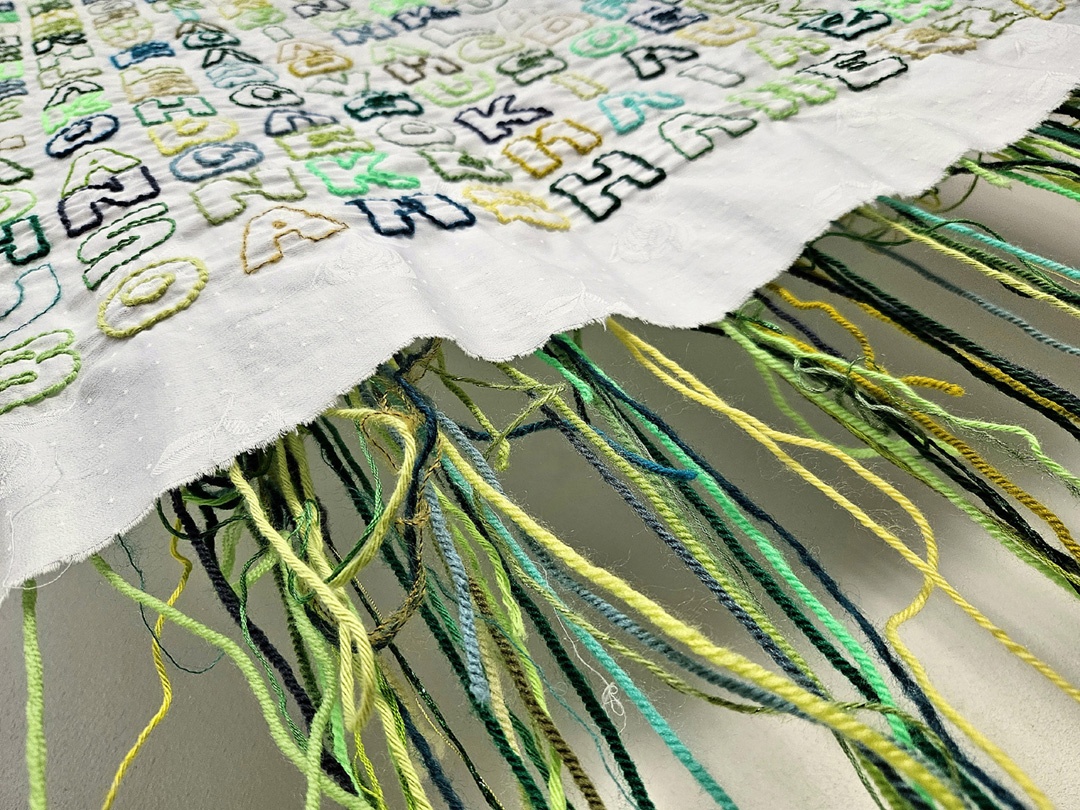
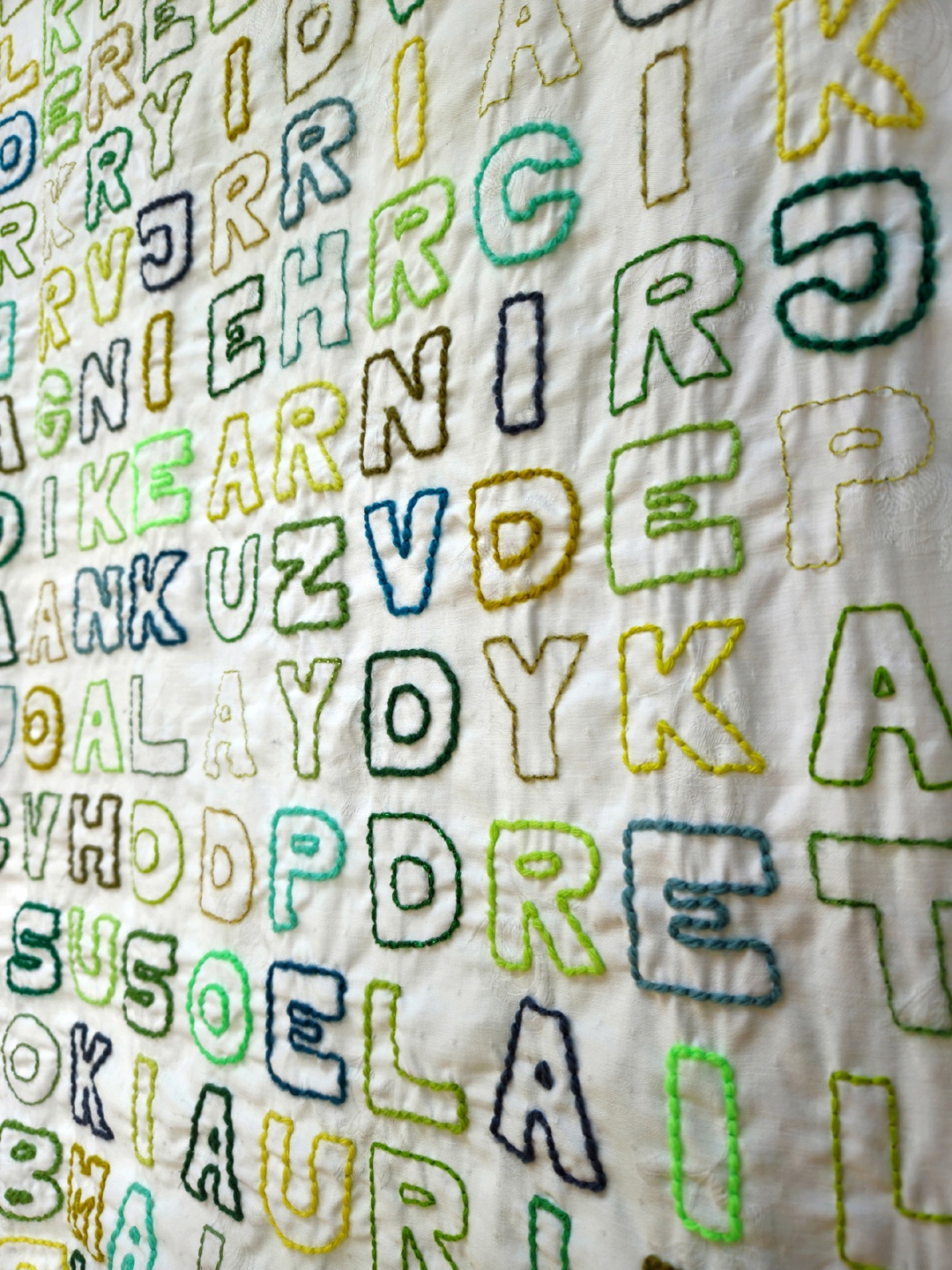
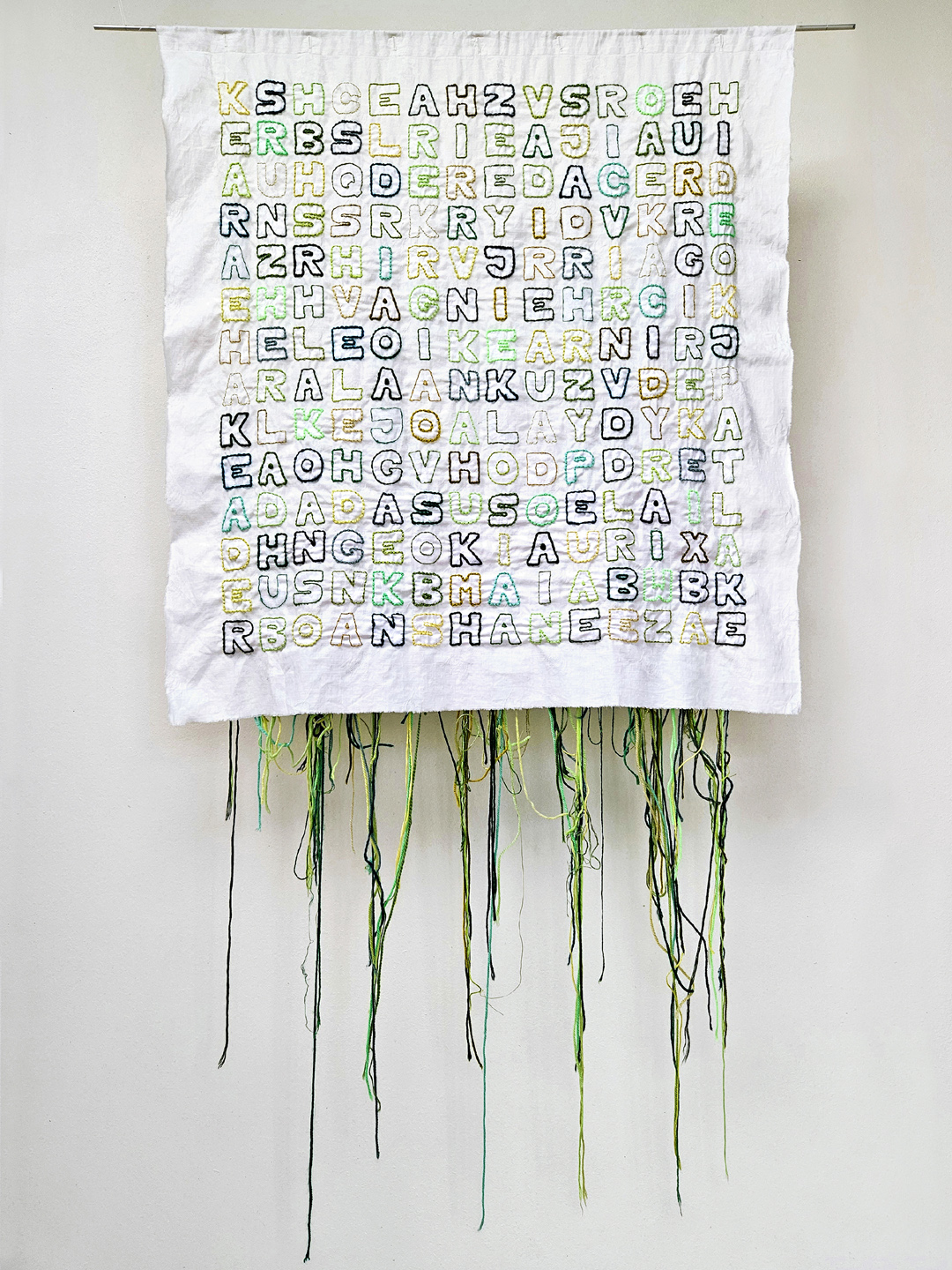
There are 37 languages worldwide with a total of 50 million or more speakers (source: Ethnologue database, 2025). I looked up the adjective ‘green’ in these most spoken languages and transcribed the terms into English wherever the Latin alphabet was not used. I then assigned each language a yarn in a different shade of green. The 37 translated terms are embroidered here. Neither the languages themselves nor the letters within each word are arranged sequentially; the order of the 196 letters in total was purely random. However, the shade of green assigned to each language was consistently maintained throughout. The resulting ‘illegibility’ of the work is a conscious decision. If the terms were written out in full, viewers would unintentionally begin to ‘read’ the work. However, this work is not about the individual languages as such, but rather about the global notion of green.
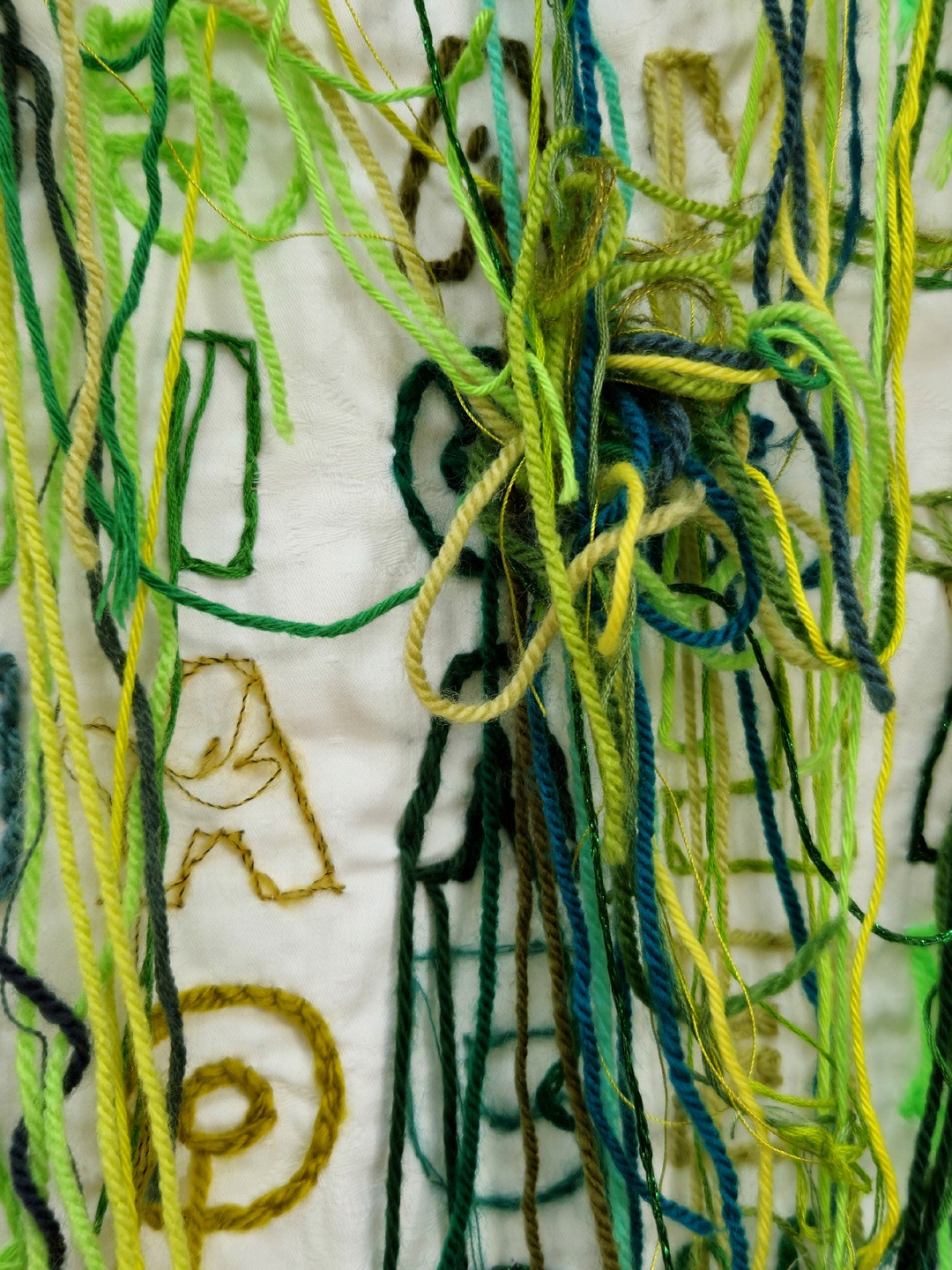
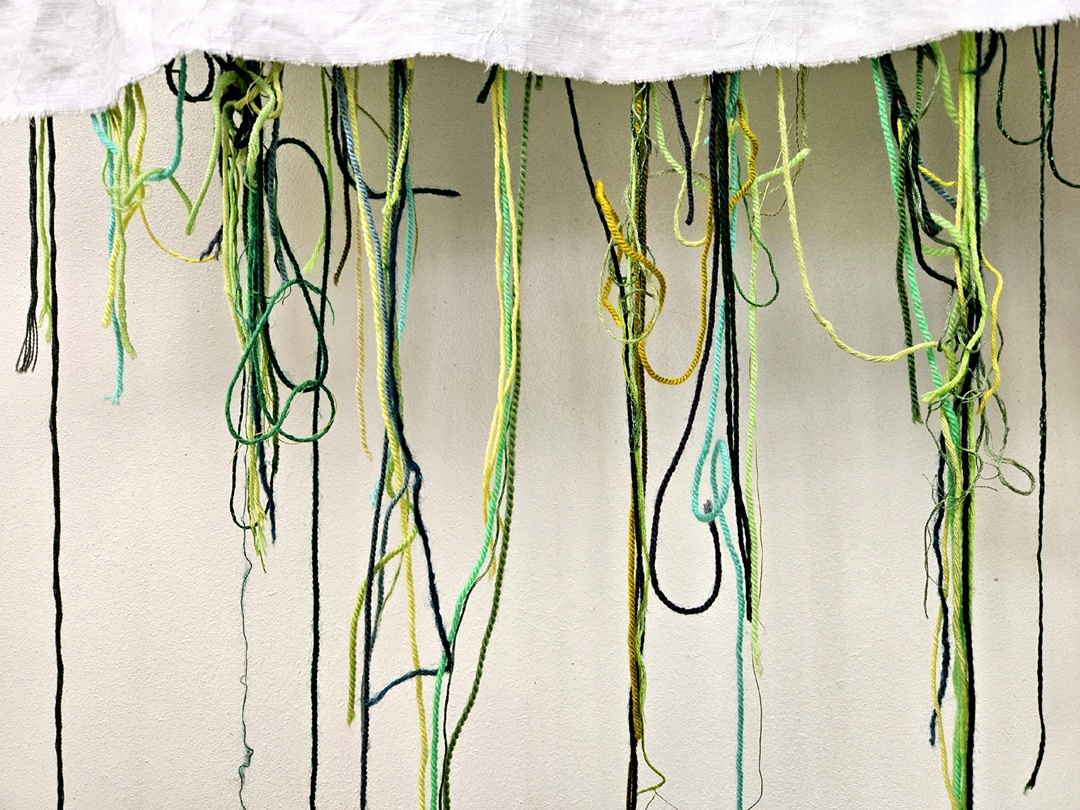
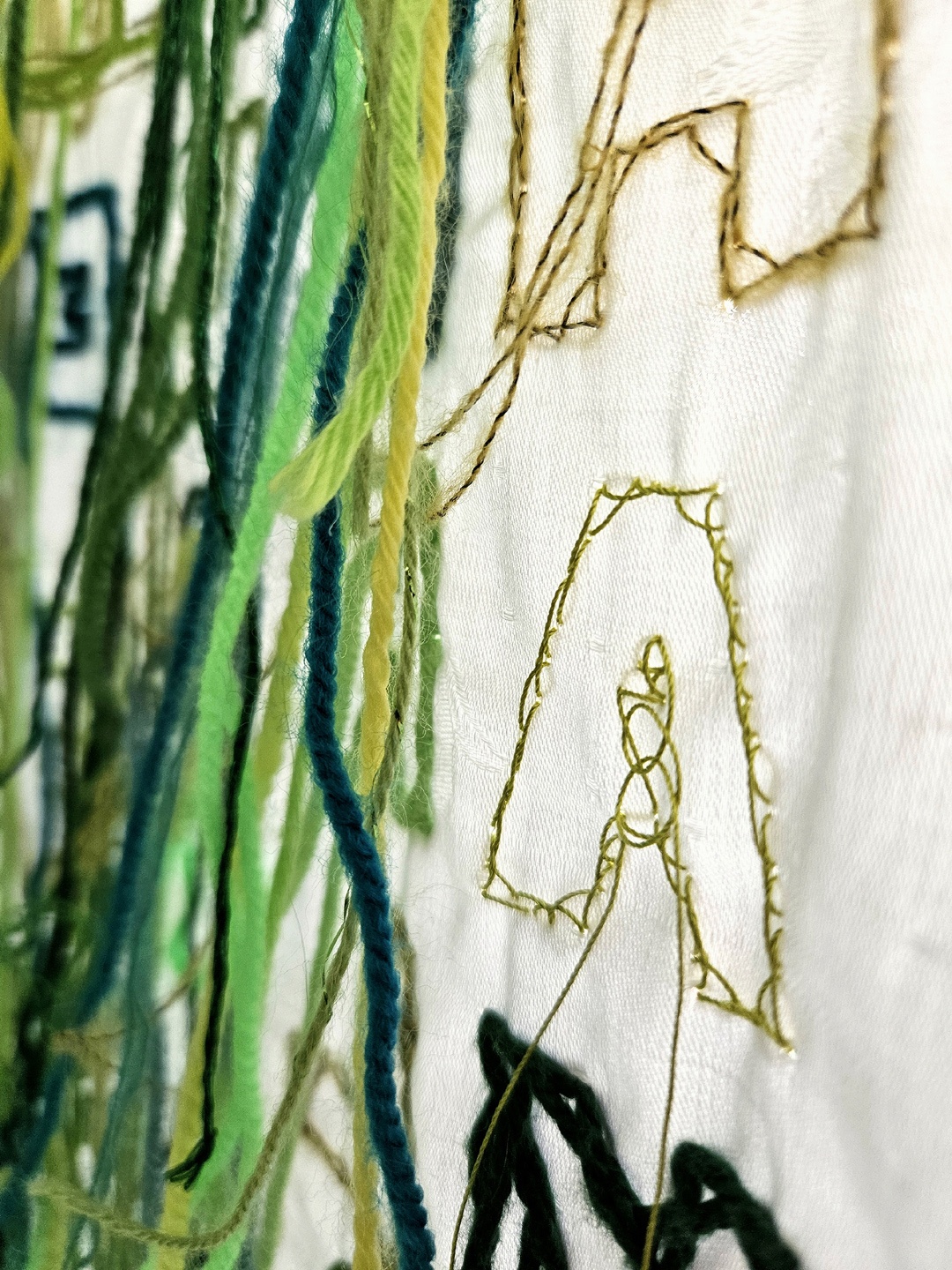
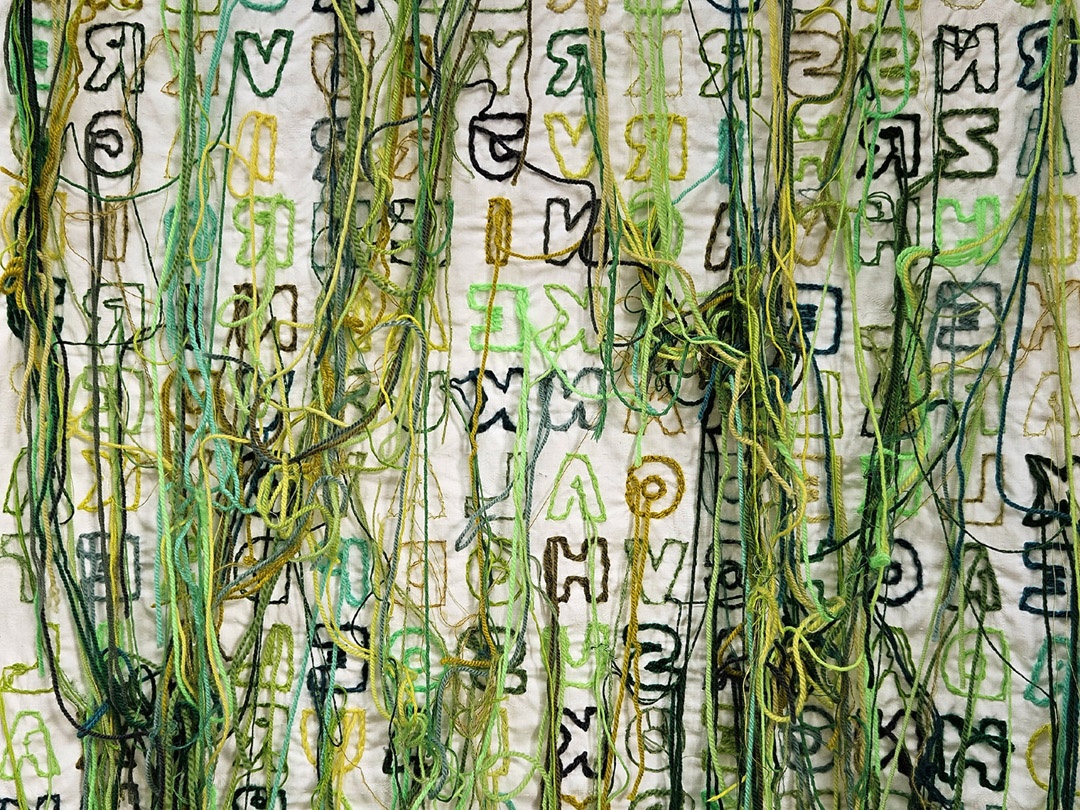
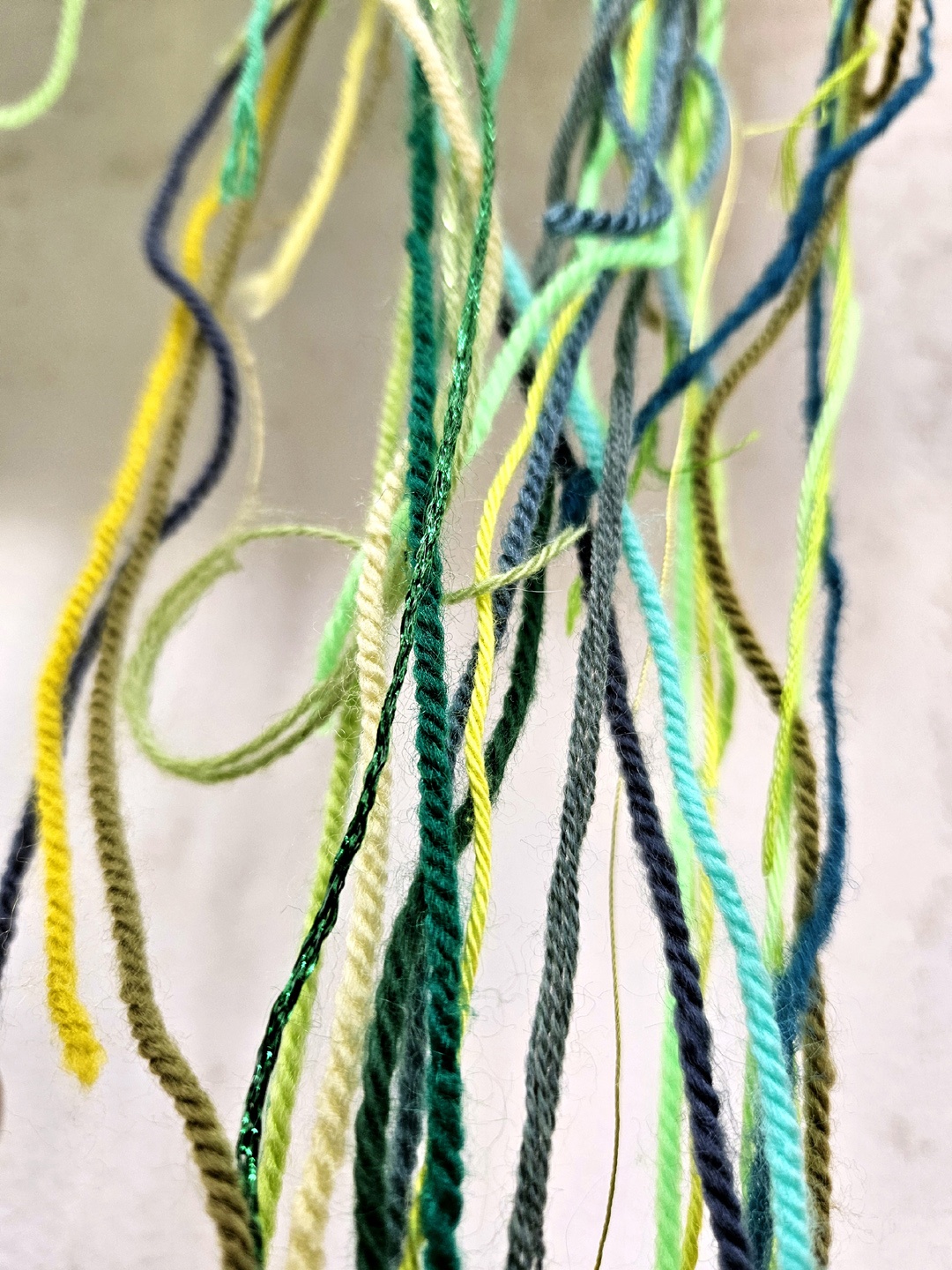
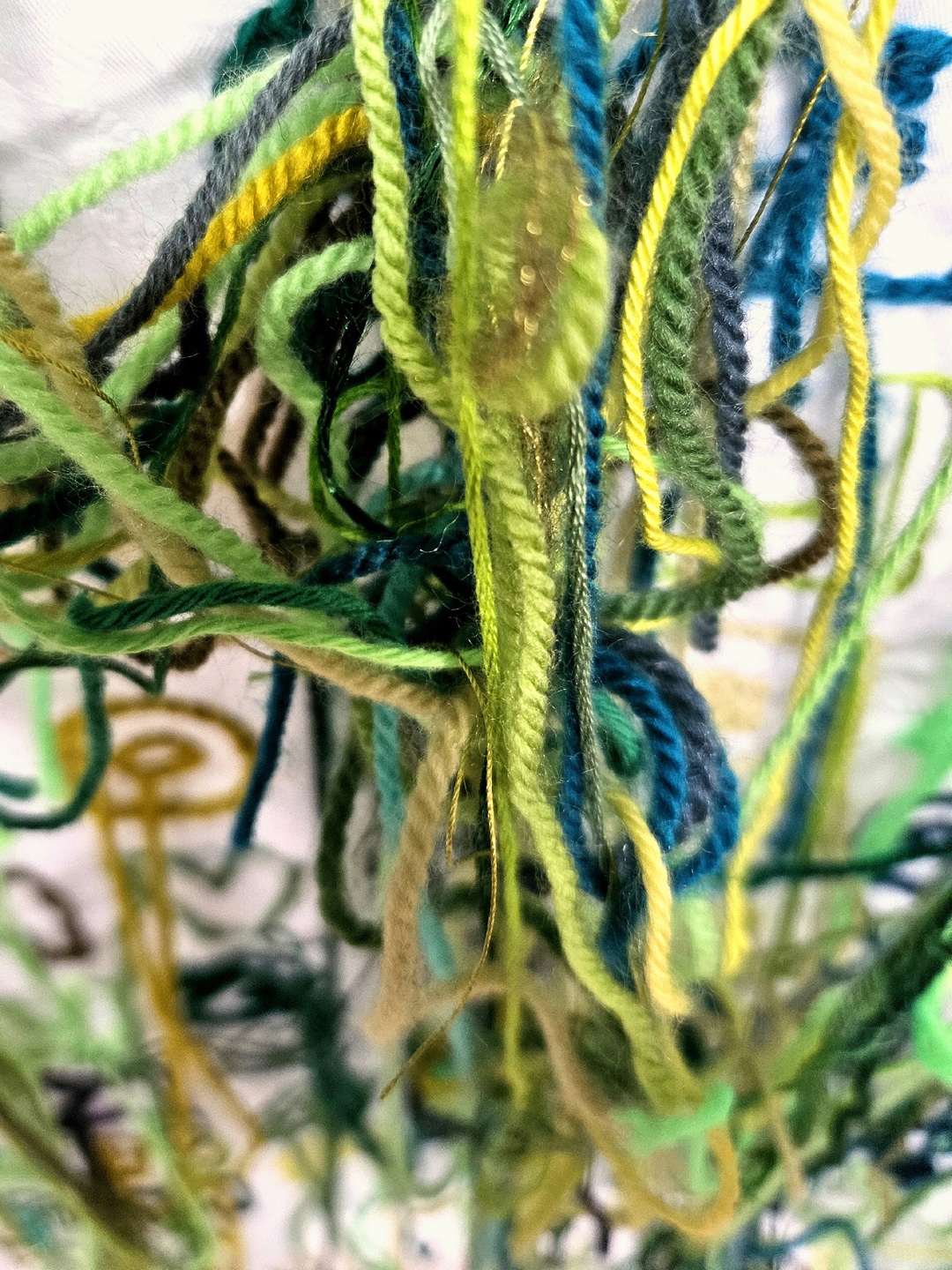
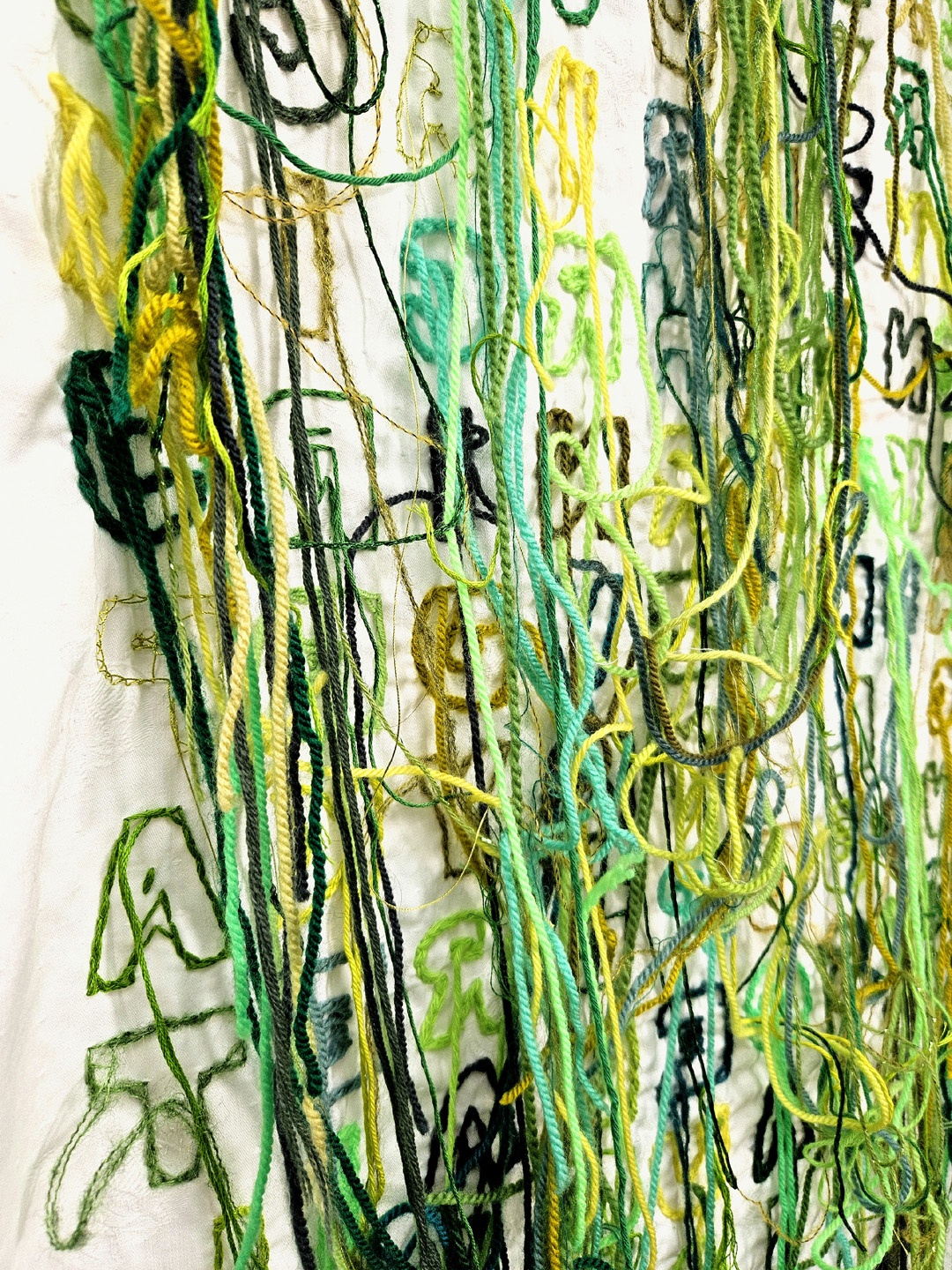
In order to integrate the human component into the abstract concept, the length of each piece of yarn is my arm span. The work on the front simultaneously shaped the back: Any yarn not needed for the embroidery on the front hangs loosely on the back, gradually bringing it to life. This approach leads to both sides of the artwork having the same relevance. The distinction between front and back dissolves, the two sides are equally important. One was consciously created, the other grew by itself. One is shaped by the concept, the other by chance. One is organised, the other organic. While the organised side displays human-made symbols (the letters) and structures (the languages), the organic side is reminiscent of jungle-like vegetation, of climbing plants or seaweed, intertwined in a seemingly chaotic manner, despite having emerged from a clearly defined underlying plan.
The contrast between organised and organic, shown in the two fundamentally different sides of the artwork, symbolises the idea that nature prevails in the long term: Even if humanity imposes its organisation on the world and subjects it to its systems, organic nature will ultimately triumph and outlive humanity.
(Embroidered acrylic, cotton, mohair and wool on an old duvet cover, aluminium rod, 90 x 85 cm, 2026)